
Table of Contents
- Necklace Length Chart: From Choker to Rope
- How to Measure Neck for Necklace: 3 Simple Methods
- Choosing Length Based on Height and Body Frame
- Necklace Length for Different Necklines
- How to Layer Necklaces Without Tangling
- Weight and Thickness: What to Check Before Buying
- Your Perfect Necklace Length Awaits
- Frequently Asked Questions
Last Updated: September 9, 2026
Finding the right necklace length is a simple measurement that changes how a piece looks on you. How to choose necklace length comes down to understanding where each standard size falls on your body and what effect you want to create. This guide walks you through the standard sizes, measuring methods, and styling rules.
The most important insight is that necklace length is about proportions, not preference alone. A 16-inch chain rests at the collarbone, while an 18-inch chain sits just below it, and that single inch shifts the visual focus (brilliantearth.com).
Necklace Length Chart: From Choker to Rope
Standard necklace lengths range from 14 inches to over 36 inches, and each one targets a specific spot on your torso. Knowing these anchor points is the first step in learning how to choose necklace length.
| Length | Placement | Best For |
|---|---|---|
| 14-16 in (choker) | Snug around the neck | High necklines, showing off collarbones |
| 18 in (princess) | At the collarbone | Most people; pairs with any neckline |
| 20-24 in (matinee) | Below collarbone to chest | Business attire, adding length to the torso |
| 28-36 in (opera/rope) | Chest to waist | Layering, dramatic statements, doubling up |
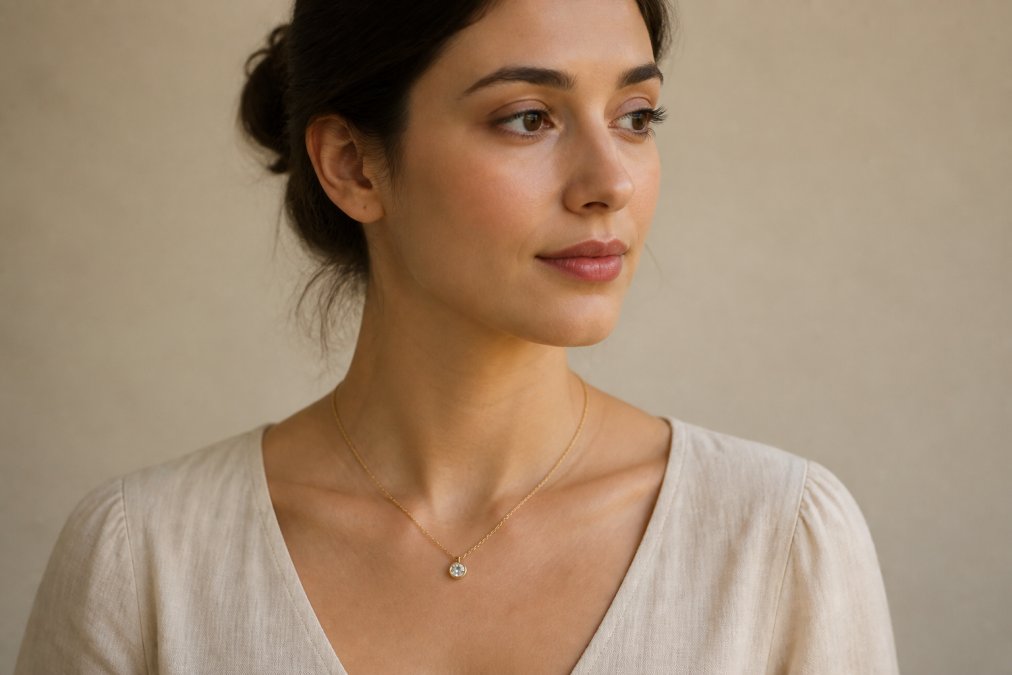
The princess length at 18 inches is the most versatile starting point because it flatters nearly every body type and neckline (gemsociety.org). For a pendant that sits prominently in the hollow of the throat, drop to 16 inches; for a relaxed look over sweaters, go up to 20 inches.
How to Measure Neck for Necklace: 3 Simple Methods
Measuring your neck for a necklace does not require special tools, just a flexible tape measure or a piece of string. This is the most reliable way to guarantee a comfortable fit.
Method 1: The tape measure. Wrap a flexible tape measure around your neck at the base just above the collarbone. Keep it snug but not tight, you should be able to slide a finger between the tape and your skin. Add 2 to 4 inches for a comfortable fit, then match that total to the nearest standard length. For a choker that sits high, add only 1 to 2 inches; for a relaxed princess length, add 3 to 4 inches.
Method 2: The string method. If you do not have a tape measure, use a piece of string, wrap it around your neck, mark the overlap with a pen, and lay it flat against a ruler. The string should touch your skin along its entire path without leaving an indentation.
Method 3: Measure an existing necklace. Lay a necklace you already own on a flat surface and measure from the clasp, straight along the chain, to the other end of the clasp. Curved or draped chains will measure longer than their actual drop, so always measure the chain fully extended.
Troubleshooting common measuring errors:
- The 'too tight' trap: If you measure your neck at 14 inches and order a 14-inch choker, it will feel restrictive. The standard choker size of 14-16 inches already includes breathing room, so always add at least 1 inch to your raw neck measurement for any style.
- The pendant drop problem: A pendant adds roughly 1 to 2 inches of visual length, so if you are buying a 16-inch chain with a 2-inch pendant, the total hang will be closer to 18 inches on your chest. For a pendant you want to sit in the hollow of your throat, subtract the pendant drop from your target length.
- The clasp factor: Lobster clasps add about 0.5 inches to the effective length. If you are between sizes, the clasp can make the difference between a snug fit and a comfortable one.
A note on adjustable chains: Many retailers offer necklaces with 2-inch extender chains. If you are unsure of your size, look for pieces with extenders, they give you the flexibility to wear the same necklace at 16, 17, or 18 inches depending on your neckline.
Choosing Length Based on Height and Body Frame
Your height and body frame influence which necklace length creates the most balanced silhouette.
For petite frames under 5'4", shorter lengths from 16 to 18 inches work best because they keep the eye upward and elongate the neck (goodhousekeeping.com). For taller frames over 5'7", you can carry opera and rope lengths with ease.
Body frame matters as much as height. A delicate 16-inch chain can look lost on a broader or taller frame, while a thicker 20-inch chain balances the shoulders. The rule of thumb is to match the chain's visual weight to your frame: finer chains for smaller frames, bolder links or pendants for larger ones.
Necklace Length for Different Necklines
The neckline of your top or dress dictates which necklace length for different necklines will look intentional rather than accidental.
The core principle: create a continuous line. The necklace should either echo the shape of the neckline or deliberately contrast it.
- V-neck: Match the angle of the V. An 18-inch chain with a pendant that echoes the V shape draws the eye downward gracefully. Avoid chains that sit above the V line. For a deep V-neck (plunging below the sternum), a 24-inch chain or longer creates a balanced vertical line. The pendant should land inside the V, not on the fabric edges.
- Crew neck and Turtleneck: Go longer. A 20 to 24-inch chain rests over the fabric and adds a vertical line that lengthens the torso. Chokers disappear into a turtleneck, so skip anything under 16 inches. A 22-inch chain is the sweet spot for most crew necks.
- Strapless or Off-the-Shoulder: This is the moment for a choker or a 16-inch collar. With bare shoulders, the collarbone area is the focal point, and a shorter chain highlights it beautifully. If you prefer a longer look, an 18-inch chain works, but avoid anything that falls onto the bust line.
- Button-down or Collared: Keep it simple with an 18-inch princess length that sits just below the collar. A pendant at this length peeks out naturally without fighting the shirt's structure. Avoid chokers with collared shirts.
- Sweetheart or Square Neckline: These necklines have a horizontal line, so a shorter chain (16-18 inches) that follows the curve of the neckline works best. For a square neckline, a 16-inch chain with a geometric pendant mirrors the shape.
- Halter Neckline: The neck is bare, but the straps frame it. A 16-inch chain or a choker works well because it does not compete with the halter's vertical lines.
- High Neck or Mock Turtleneck: Similar to a turtleneck, go longer, 20 to 24 inches. The chain should rest on the fabric, not on the skin above the collar. A 24-inch chain with a bold pendant creates a striking contrast against a high neck.
The 'one-inch rule' for necklines: For every inch of neckline depth (measured from the collarbone to the lowest point of the opening), add 2 inches to your base chain length. A crew neck has zero depth, so an 18-inch chain works. A V-neck with a 3-inch depth calls for a 24-inch chain. This rule works for most standard necklines and takes the guesswork out of pairing.
Layering over necklines: When layering over a neckline, the rule is contrast. Pair a delicate 16-inch chain with a bold 24-inch piece to create depth, or keep all layers within the same metal tone for a cohesive look. For a solid-color top, you can layer up to three chains at 16, 18, and 22 inches.
A quick reference for tricky necklines:
| Neckline | Best Length | Why It Works |
|---|---|---|
| Deep V-neck | 24-28 in | Extends the V line, elongates the torso |
| Boat neck | 16-18 in | Fills the bare space above the horizontal line |
| Asymmetric (one-shoulder) | 16 in choker | Keeps focus on the bare shoulder |
| Cowl neck | 20-24 in | Rests on the fabric's drape, adds vertical interest |
| Turtleneck (chunky knit) | 24-36 in | Overpowers the bulk, creates a long line |
How to Layer Necklaces Without Tangling
Layering necklaces adds depth, but it fails when all chains are the same length. The secret to how to layer necklaces without tangling is to vary lengths by at least 2 inches.
This staggered spacing keeps each chain from crossing over the others. Choose one focal pendant and keep the other layers simple, so the eye has a clear resting point.
To prevent tangling while wearing, clasp the shortest chain first and work outward. When storing, fasten each necklace individually and lay them flat or hang them on separate hooks. Never store layered necklaces as a single tangled unit.
For a foolproof layer, use a single longer chain and double it. An opera length at 36 inches can be wrapped twice to create a two-strand look without managing multiple clasps. This is a practical trick for travel.
Weight and Thickness: What to Check Before Buying
Chain weight and thickness determine how a necklace drapes. A heavy pendant on a delicate 1mm chain will pull and distort the links, while a thick chain can overpower a small charm.
Check the chain's thickness in millimeters before purchasing. Delicate chains, around 1mm, suit small pendants and everyday wear but require care. Mid-weight chains, around 2mm, hold medium pendants securely and are the most durable for daily use. Chunky chains, 3mm and above, make a statement on their own.
The pendant weight matters more than the chain length. A 16-inch chain with a heavy pendant will sag in the front, changing the effective length. When considering a pendant, it's helpful to ensure it complements the chain's capacity.
Your Perfect Necklace Length Awaits
Choosing the right necklace length is a mix of measurement and intention. Measure your neck or an existing chain, match the length to your frame and neckline, and consider the weight of the pendant you plan to wear.
Every necklace arrives with a personalized message card. Explore our necklaces and find the length that speaks to the moment you are celebrating.
Frequently Asked Questions
What is the most attractive necklace length?
The most attractive necklace length depends on your neckline and facial features. For most people, an 18-inch princess length sits right at the collarbone and creates a flattering balance. If you have a longer neck, a 16-inch choker can look elegant. For V-neck tops, a 20-inch or 24-inch pendant that echoes the neckline's angle draws the eye upward. Try the string method at home: loop a piece of string around your neck, hold the ends at different points, and see which drop looks best in a mirror.
Is an 18 inch or 20 inch necklace better?
An 18-inch necklace is the standard choice for most women because it rests right at the collarbone and works with nearly every neckline, from crew necks to button-down shirts. A 20-inch necklace hangs about two inches lower, just below the collarbone, which suits taller frames or those who prefer a longer silhouette. If you are between 5'4" and 5'7", either length works, but consider your torso. For petite frames under 5'4", 18 inches keeps proportions balanced, while 20 inches suits women 5'8" and taller.
How long should a necklace be for a 5'4" woman?
A 5'4" woman typically looks best in an 18-inch princess length necklace, which rests at the collarbone and visually elongates the neck. Chokers at 16 inches can also flatter petite frames by drawing attention upward. Avoid ultra-long 36-inch rope styles, as they can overwhelm a shorter torso and make you appear smaller. For layering, pair an 18-inch piece with a 20-inch pendant to create vertical lines that add the illusion of height. Your neck circumference and shoulder width matter more than height alone.
Do I want a 16 or 18 inch necklace?
Choose a 16-inch choker if you have a slim neck measuring about 13-14 inches in circumference, or if you want a bold, fashion-forward look that sits high on the throat. Choose an 18-inch princess length if you prefer versatility, as it rests right at the collarbone and flatters nearly every body type and neckline. The 18-inch is the safest gift choice when you are unsure of the recipient's preference. For a pendant, 18 inches allows the charm to sit at the hollow of the throat where it catches light naturally.